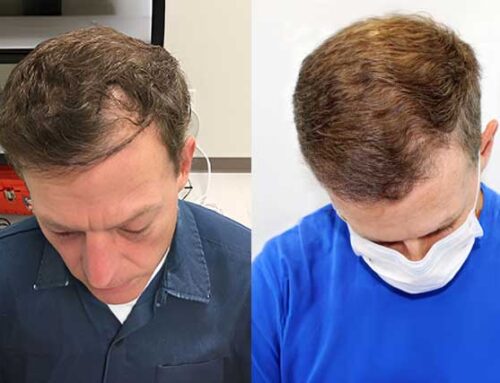
Understanding Turkey Hair Transplant Risks and What Patients Should Know
For many men and women experiencing hair loss, the journey toward restoration often leads to a crossroads: the choice between local, specialized care and the allure of medical tourism destinations like Turkey. While there are undoubtedly talented surgeons worldwide, the rise of the hair mill model has introduced a specific set of Turkey hair transplant risks that every patient must weigh before boarding a plane.
Understanding Turkey hair transplant risks is essential before choosing a clinic, as not all providers follow the same medical standards and long-term planning.
We believe that an informed patient is a successful patient. With Turkey becoming a global hub for high-volume hair restoration, it is important to look beyond the sleek marketing and Instagram transformations.
When you choose a hair transplant, you are not just buying a service. You are investing in a finite biological resource: your donor hair. Here is a look at the five most common challenges patients face in high-volume environments, and why a physician-led approach is critical to your long-term results.
1.Why Turkey Hair Transplant Risks Often Include Overharvesting

The most significant risk of the high-volume model is overharvesting. In an effort to provide a high-density “wow” factor in a single session, many clinics extract too many grafts from the donor area.
The Clinical Reality: Your donor hair is a limited bank account. If a clinic spends too much of it in one session, the back of your head may appear patchy or moth-eaten. More importantly, if your hair loss progresses naturally as you age, you may have no grafts left for future touch-ups. A prestigious practice focuses on Donor Stewardship, which means ensuring you look great today without bankrupting your options for tomorrow.
2. The Artistry of the Hairline
A hair transplant is as much an architectural feat as it is a medical one. We often see patients returning from overseas with “wall-to-wall” hairlines. These are lines that are too straight, too low, or lack the subtle irregularities of a natural growth pattern.
The Clinical Reality: A technician-designed hairline often fails the test of time. As you age, an unnaturally low or straight hairline can look out of place. True artistry requires a surgeon to account for facial symmetry, future thinning, and the specific exit angles of each follicle to ensure the hair flows naturally rather than looking like a pluggy implant.
3. The Importance of Physician-Led Surgery
In many international discount clinics, the primary surgeon is often a figurehead who may only be present for the initial consultation or a brief greeting. The actual surgical work, including the creation of recipient sites and the handling of grafts, is frequently delegated to technicians who may be managing multiple patients simultaneously. This lack of direct medical supervision is a significant factor contributing to various Turkey hair transplant risks, as the nuance of artistry and medical safety is often lost when a physician is not hands-on throughout the procedure.
The Clinical Reality: In the United States, and specifically within our 5-star standard, the physician’s hands-on involvement is a non-negotiable safety and quality benchmark. The person designing your surgery should be the one performing the most critical steps. Delegation to unsupervised technicians is where the nuance of artistry and medical safety is often lost.
4. Graft Survival and Hidden Turkey Hair Transplant Risks
It is a common marketing tactic to promise “unlimited grafts.” However, a high graft count does not always equate to high density. If grafts are handled roughly, kept out of the body for too long, or stored in improper solutions, they will not survive the transfer.
The Clinical Reality: It is better to transplant 2,500 healthy, viable grafts than 5,000 grafts that have a 50 percent survival rate. High-volume clinics often prioritize speed over follicular viability. Our focus remains on the meticulous handling of every single follicle to ensure that what we transplant actually grows.
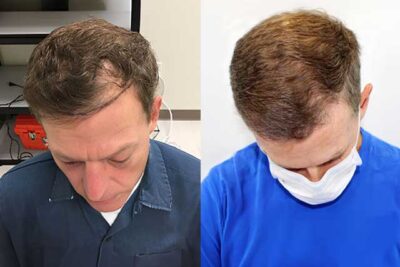
5. Long-Term Care and Turkey Hair Transplant Risks After Surgery
A hair transplant is not a one-day event. It is a twelve-to-eighteen-month biological process. Patients in medical tourism circuits often report feeling “ghosted” once they return home. If shock loss occurs at month three or a minor infection develops at week two, a WhatsApp message to a clinic 5,000 miles away is rarely a substitute for an in-person evaluation.
The Clinical Reality: Recovery is a partnership. Having a local, prestigious team means you have a medical home for your follow-ups, your PRP treatments, and your peace of mind. We are here to walk with you through the entire growth cycle and celebrate with you when your full results finally emerge.
Frequently Asked Questions About Hair Transplants in Turkey vs. the USA
What are the biggest risks of getting a hair transplant in Turkey?
The primary risks include overharvesting of the donor area, which causes permanent thinning at the back of the head, and poor graft survival rates due to high-volume technician-led environments.
Why is donor hair management important for hair restoration?
Donor hair is a finite resource. If too many grafts are taken during a first procedure, there will be no hair left for future surgeries if natural hair loss continues as the patient ages.
What is a hair mill?
A hair mill is a high-volume clinic where surgeons oversee many surgeries at once while delegating the actual medical procedures to technicians. This model prioritizes quantity over individualized patient care and safety.
How do I know if my hair transplant hairline will look natural?
A natural hairline requires an irregular, feathered design and correct follicle angulation. This is best achieved by an experienced surgeon who understands facial aging rather than a technician following a standard template.
Why is the survival rate of grafts lower in some international clinics?
Graft survival decreases when follicles are out of the body for too long or handled improperly. In fast-paced clinics, the delicate nature of the hair follicle is often compromised to speed up the surgery.
Is it possible to fix a botched hair transplant from Turkey?
Hair transplant repair surgeries are possible but often more expensive and complex. If the donor area has been overharvested, there may not be enough hair left to achieve the desired density or fix a poor hairline.
Why should I choose a US-based hair transplant clinic over an overseas option?
Choosing a US clinic like Grow Your Hair Back in McLean, VA. ensures physician-led surgery, strict medical safety standards, and accessible long-term aftercare that is not possible when traveling 5,000 miles for a procedure.
What should I look for in a 5-star hair transplant clinic?
Look for transparent reviews, a surgeon who performs the actual incisions, a focus on long-term donor hair health, and a clear plan for post-operative follow-up care.