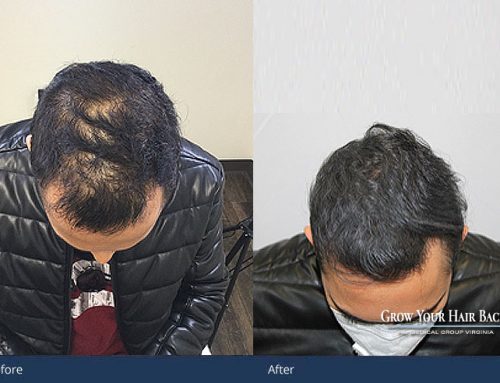
Enhanced Plasma Therapy Is Changing Hair Recovery
Enhanced Plasma Therapy is helping many people fight thinning hair and hair loss without surgery. This advanced treatment is designed to improve scalp health, stimulate follicles, and support stronger natural hair growth. If you are looking for a non-invasive solution, Enhanced Plasma Therapy may be the answer.

Enhanced Plasma Therapy (EPT) has emerged as a leading non-surgical approach. By harnessing concentrated growth factors and signaling proteins derived from the patient’s own blood, EPT stimulates natural hair regrowth and improves hair quality. Many clinics now include EPT as part of comprehensive restoration strategies because of its safety profile and complementary benefits.
Understanding Hair Loss and Its Challenges
Effective hair restoration begins with understanding why hair is lost in the first place. Several common contributors include:
- Genetic factors: Androgenetic alopecia (hereditary pattern hair loss) progressively miniaturizes follicles, producing thinner hair and eventual baldness.
- Hormonal changes: Pregnancy, menopause, and thyroid disorders can accelerate shedding.
- Stress and lifestyle: Poor nutrition, acute illness, and chronic stress disrupt the normal hair growth cycle.
- Medical and environmental conditions: Autoimmune disorders, certain medications, and scalp conditions can contribute to thinning.
Because hair loss is typically multifactorial, an effective plan often combines several approaches. Enhanced Plasma Therapy works by enhancing the body’s own repair and growth mechanisms, making it a valuable component of a broader strategy.
How Enhanced Plasma Therapy Works
Enhanced Plasma Therapy is a straightforward procedure but it relies on precise preparation and application:
Step 1: Collection and Preparation
A small blood sample is drawn from the patient and processed in a specialized device that separates blood components. The goal is to concentrate growth factors, signaling proteins, and other regenerative constituents into a plasma fraction suitable for scalp application.
Step 2: Application to the Scalp
The enriched plasma solution is injected into targeted areas of thinning scalp. Because the material is autologous (from the patient), the risk of allergic reaction or rejection is minimal.
Step 3: Biological Activation
When introduced to the scalp, the concentrated growth factors interact with follicular cells and surrounding tissue. This initiates repair and regrowth signaling that can shift follicles from a resting to an active growth phase.
Benefits of Enhanced Plasma Therapy
Clinical experience and research indicate EPT acts via several complementary mechanisms:
- Follicle reactivation: EPT provides signaling molecules that encourage follicles stuck in the resting (telogen) phase to re-enter the growth (anagen) phase.
- Improved circulation: Growth factors promote microvascular formation, increasing oxygen and nutrient delivery to follicles.
- Cellular repair and renewal: Proteins in the treatment stimulate surrounding support cells to repair and regenerate, improving the follicle’s environment.
- Collagen support: EPT supports dermal collagen production, strengthening the structural matrix that supports hair growth.
These combined effects make EPT a holistic treatment that addresses the follicle, its blood supply, and the surrounding tissue—rather than serving as a purely cosmetic intervention.
Why Choose Enhanced Plasma Therapy Instead of Surgery
Because hair grows in cycles, not all follicles respond at the same time. Typical protocols include:
- Initial phase: A series of sessions spaced 4–6 weeks apart to target follicles during different growth stages.
- Maintenance phase: Periodic follow-ups every 4–6 months help preserve gains and slow future thinning.
- Session time and recovery: Procedures usually take under an hour and involve minimal downtime; most patients resume normal activities immediately.
EPT is generally well tolerated. Temporary redness or sensitivity at injection sites is common and typically resolves within 24–48 hours.
Benefits of Enhanced Plasma Therapy
Key advantages that make EPT attractive to patients and clinicians alike include:
- Non-surgical: No incisions, sutures, or anesthesia required.
- Minimal downtime: Rapid return to daily activities.
- Natural results: Because EPT uses the patient’s own biology, outcomes blend naturally with existing hair.
- Versatility: Can be used alone or as part of a combined treatment plan.
- Safety: Low risk of adverse reaction when performed under sterile conditions by trained clinicians.
Is Enhanced Plasma Therapy Safe?
Rather than serving only as an alternative to surgery, EPT is often used as an adjunct to hair transplantation. When combined strategically with surgery, it can improve both short- and long-term outcomes:
- Preparing the scalp: Pre-operative EPT can improve scalp health and optimize recipient-site conditions prior to graft placement.
- Boosting graft survival: Post-operative EPT delivers growth signals that may enhance healing and the survival rate of transplanted grafts.
- Accelerating recovery: Many patients experience reduced inflammation and faster recovery in donor and recipient areas when EPT is used post-operatively.
- Enhancing long-term density: By stimulating native follicles, EPT helps improve overall coverage and density, complementing the transplanted grafts.
In short, EPT is a valuable tool that maximizes the effectiveness and durability of surgical hair restoration procedures.
Setting Realistic Expectations
EPT is effective, but it is not a miracle cure. Results vary based on:
- Stage of hair loss: Patients with active follicles typically respond better than those with advanced, complete baldness.
- Overall health: Nutrition, stress levels, and medical conditions affect outcomes.
- Consistency: Adherence to the recommended treatment and maintenance schedule is critical for sustained success.
Most patients notice a gradual improvement over several months—reduced shedding first, followed by increased thickness and coverage.
Who Is a Candidate for Enhanced Plasma Therapy?
EPT may be appropriate for:
- Men and women with thinning hair or early-stage hair loss.
- Individuals seeking a non-surgical option.
- Patients preparing for or recovering from a hair transplant.
- Those who want a safe treatment with minimal downtime.
A hair restoration specialist will assess scalp health, hair density, medical history, and goals during a consultation to determine candidacy and design a personalized plan.
The Future of Enhanced Plasma Therapy
Enhanced Plasma Therapy is part of a broader trend toward regenerative approaches in aesthetic medicine. As preparation and delivery techniques improve, EPT’s role as both a stand-alone treatment and an adjunctive therapy is likely to expand.
For patients, the key takeaway is that more safe, effective options exist today to restore hair in a natural, evidence-informed way.
Take the Next Step
If you are struggling with thinning hair, Enhanced Plasma Therapy offers a scientifically supported, non-surgical path forward. At Grow Your Hair Back Hair Restoration Clinic, we create individualized treatment plans that combine EPT with surgical and non-surgical options when appropriate.
Schedule a consultation to learn whether Enhanced Plasma Therapy can support your long-term hair restoration goals.